Introduction: Puppy Training
Bringing a brand new doggy domestic is a thrilling and cushty enjoy, but it additionally comes with good sized responsibility. Puppy Training is one of the most crucial elements of raising a healthful, nicely-behaved, and assured canine. Proper schooling not handiest builds precise conduct however also strengthens the bond between you and your home dog.
This entire guide covers the entirety you need to understand approximately doggy education, from simple obedience and residence training to socialization and superior conduct correction. Whether you’re a primary-time dog owner or an experienced doggy figure, this text will help you teach your domestic dog correctly.
What Is Puppy Training?
Puppy schooling refers to the method of teaching younger puppies number one behaviors, instructions, and social abilities that allow them to live conveniently with humans and exceptional animals.
Why Puppy Training Is Important
- Prevents horrific behavior
- Improves communique
- Builds accept as true with and self warranty
- Encourages quality conduct
- Ensures protection for pets and those
Early doggy training lays the muse for lifelong discipline and emotional stability.
When Should Puppy Training Start?
Puppy Schooling ideally starts as early as 7–8 weeks of age.
Best Age for Puppy Schooling
| Puppy Age | Training Focus |
|---|---|
| 7–8 weeks | Name recognition, potty routine |
| 8–12 weeks | Basic commands, socialization |
| 3–6 months | Leash training, behavior control |
| 6+ months | Advanced commands, impulse control |
Early schooling prevents worry, anxiety, and aggression later in lifestyles.
Essential Puppy Training Principles
Before beginning education, it’s essential to recognize a few crucial principles.
1. Positive Reinforcement
Reward proper conduct with:
- Treats
- Praise
- Toys
- Affection
Avoid punishment—it could cause fear and confusion.
2. Consistency
Use the equal commands, tone, and guidelines every time.
3. Short Training Sessions
Puppies have brief hobby spans. Limit instructions to 5–15 minutes.
4. Patience
Every pup learns at a wonderful tempo.
Basic Puppy Training Commands
Teaching basic instructions is the inspiration of obedience training.
Essential Commands to Teach First
| Command | Purpose |
|---|---|
| Sit | Teaches calm behavior |
| Stay | Improves impulse control |
| Come | Ensures safety |
| Down | Encourages relaxation |
| No | Stops unwanted behavior |
| Heel | Controls leash walking |
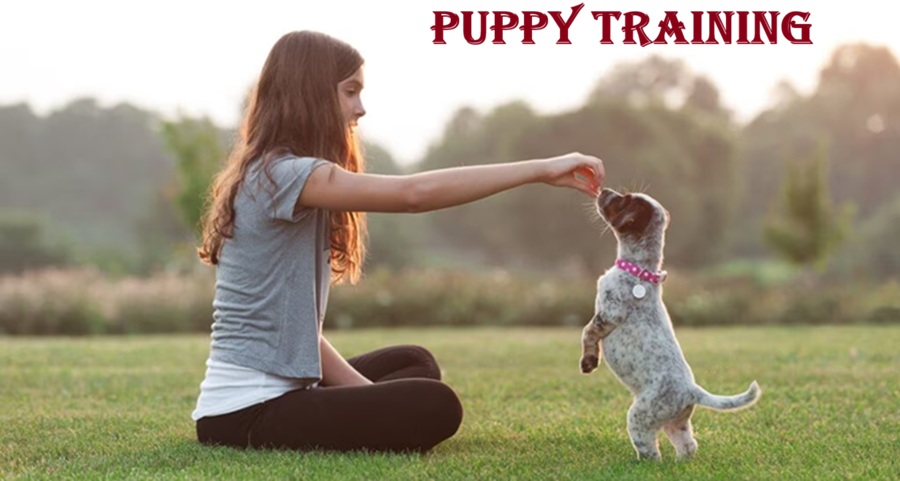
How to Teach “Sit” Command
- Hold a deal with above the doggy’s nostril
- Move it backward slowly
- Puppy really sits
- Say “Sit” and praise right away
House Training (Potty Training) Your Puppy
House schooling is regularly the biggest undertaking for today’s puppy owners.
Key House Training Rules
- Take your domestic dog out of doors after food, naps, and playtime
- Use the identical potty spot
- Praise at once after success
- Never punish injuries
Puppy Potty Training Schedule (Table)
| Time | Activity |
|---|---|
| Morning | Bathroom break |
| After meals | Potty time |
| After naps | Potty time |
| Before bedtime | Final potty |
Consistency is the important thing to hit house training.
Crate Schooling Your Puppy
- House education
- Preventing negative conduct
- Creating a steady space
Crate Training Tips
- Choose the proper period crate
- Never use crate as punishment
- Make it cushty with bedding and toys
- Gradually boom crate time
Leash Training for Puppies
Leash education teaches your pup how to stroll gently without pulling.
Steps for Leash Training
- Introduce leash interior
- Let puppy put on it without tension
- Practice brief walks
- Reward calm taking walks
Puppy Socialization Training
Socialization helps puppies grow to be confident adults.
What Is Socialization?
Introducing your domestic dog to:
- People
- Other dogs
- Sounds
- Environments
Best Socialization Age
Between 8 and 16 weeks
Socialization Checklist
| Experience | Importance |
|---|---|
| New people | Builds confidence |
| Other dogs | Prevents aggression |
| Car rides | Reduces fear |
| Noises | Prevents anxiety |
Behavioral Problems and Solutions
Common Puppy Behavior Issues
- Biting and nipping
- Chewing furnishings
- Barking excessively
- Jumping on humans
Puppy Biting Training
- Redirect to chunk toys
- Say “No” calmly
- Stop play straight away
Chewing Behavior Control
Provide:
- Teething toys
- Safe chunk bones
- Regular exercise
Puppy Training thru Breed
Different breeds require specific schooling techniques.
Examples
| Breed Type | Training Style |
|---|---|
| Labrador | Food-motivated |
| German Shepherd | Structured training |
| Beagle | Scent-focused |
| Pomeranian | Short sessions |
Advanced Puppy Training
Once easy schooling is whole, glide to advanced abilities.
Advanced Commands
- Leave it
- Drop it
- Roll over
- Place
Mistakes to Avoid in Puppy Training
- Inconsistent commands
- Lack of routine
- Punishing injuries
- Overtraining
Avoiding the ones errors speeds up studying.
Puppy Training Tools and Accessories
Essential Training Tools Table
| Tool | Purpose |
|---|---|
| Treat pouch | Rewards |
| Clicker | Timing |
| Leash | Walking |
| Crate | Safety |
| Chew toys | Teething |
Puppy Training Timeline
| Age | Training Focus |
|---|---|
| 2 months | Name, potty |
| 3 months | Sit, stay |
| 4 months | Leash |
| 5–6 months | Behavior control |
How Long Does Puppy Training Take?
Puppy education is an ongoing technique.
- Basic obedience: 3–6 months
- House training: 2–4 months
- Advanced abilities: 6–3 hundred and 65 days
Professional Puppy Training vs Home Training
Comparison Table
| Factor | Home Training | Professional Training |
|---|---|---|
| Cost | Low | High |
| Flexibility | High | Fixed |
| Control | Full | Partial |
FAQs About Puppy Training
1. When do I need to start puppy schooling?
You ought to begin doggy schooling at 7–8 weeks of age.
2. How frequently must I train my domestic dog?
Train 2–3 brief lessons each day.
3. Is crate education important?
Yes, crate education allows safety and house schooling.
4. Can antique dogs gain knowledge of?
Yes, dogs may be educated at any age, but early education is much less tough.
5. What is the great praise for domestic dog training?
Small treats, praise, and toys paintings are extraordinary.
6. Should I punish my puppy for awful behavior?
No. Positive reinforcement is the best method.
Conclusion
Puppy training is an important part of raising a satisfied, obedient, and confident dog. With staying energy, consistency, and the proper strategies, you could effectively educate your dog at home. From residence schooling and leash taking walks to socialization and advanced commands, early education ensures lifelong incredible behavior.
If you stay committed and superb, puppy training will become a worthwhile adventure that strengthens your bond and creates a well-mannered associate for future years.
Disclaimer
This article is intended for general information only. Puppy training results may differ based on individual behavior, environment, and consistency. The author is not responsible for outcomes resulting from the use of this information. For specific concerns, consult a certified dog trainer or veterinarian.